One of my friends, a CMO, asked me for advice on improving her company’s ABM (Account-Based Marketing) programs. Like many companies, they had invested in ABM as an alternative to the traditional lead-based funnel, which was no longer delivering results. But their ABM programs weren’t delivering either.
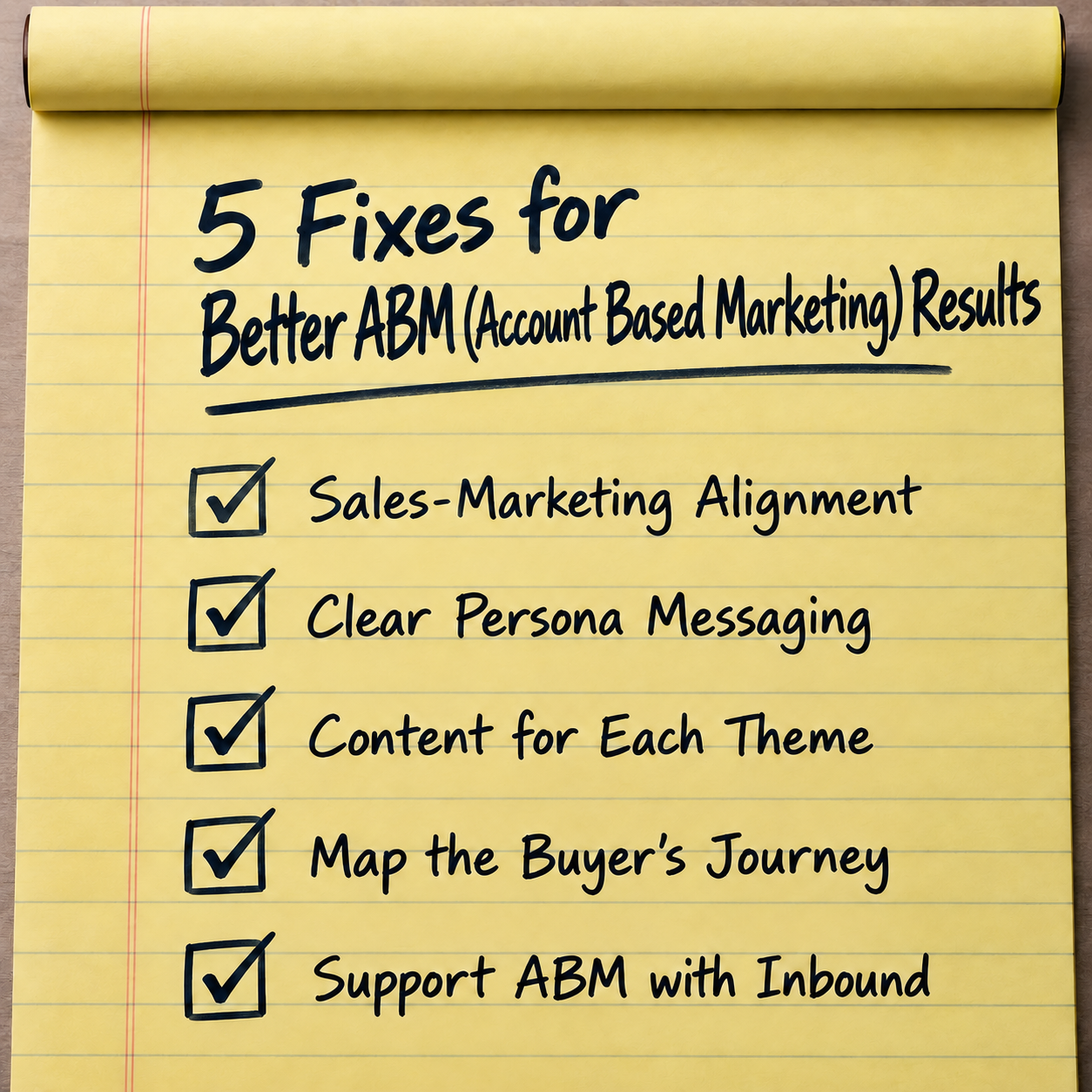
That conversation got me thinking about the challenges I’ve seen helping clients improve their ABM programs. The problems often come down to five areas.
1. Sales and marketing aren’t truly aligned. Both teams must agree on target accounts, objectives, personas, messaging, and campaigns. I typically recommend three tiers (numbers vary by company size):
Engagement: 15 high-value accounts with no existing engagement. Keep this list stable for a year.
BDR: 15 accounts showing interest but not yet sales-qualified. Keep this list stable for 90 days.
AE: 15 early-stage opportunities that need help moving forward.
All accounts must align with your Ideal Customer Profile (ICP). Agree on realistic goals and coordinated outreach. Expecting meetings with 20% of Engagement-tier accounts within four months may be overly ambitious.
2. Your messaging isn’t specific enough. Generic messaging won’t get busy decision-makers’ attention. Each persona has different priorities and pain points, often influenced by their industry. Your messaging must show how your solution addresses their specific challenges. This becomes the foundation for your campaigns and content.
3. Your content isn’t compelling or relevant. If you’re targeting five personas with two or three themes each, you may need 10 to 15 pieces of compelling content. Generic content produced by ChatGPT or writers without industry knowledge rarely delivers unique insights. Another mistake is educating customers about problems they already understand. Your content must offer fresh perspectives, practical insights, and a reason to engage.
4. The buyer’s journey is fragmented. Every touchpoint must reinforce your messaging. I worked with a company that launched a headless solution targeting developers, yet its website remained focused on CXOs for nearly a year. Field marketing, ABM teams, and corporate marketing must coordinate websites, landing pages, emails, and sales interactions.
5. You’ve neglected inbound marketing. ABM and inbound marketing should complement each other. Your target accounts research solutions, read industry publications, and search on Google/GenAI. Your messaging must be consistent across these channels. Strong inbound marketing reinforces your ABM efforts.
The bottom line: ABM isn’t simply about targeting fewer accounts with personalized campaigns. It requires sales and marketing alignment, buyer understanding, compelling content, and a consistent experience across every touchpoint.
Before investing more in ABM, examine these five areas. Fixing the fundamentals can deliver more value than another campaign or marketing tool.


Leave a comment